
Evidence
Ferry transport
Last updated:
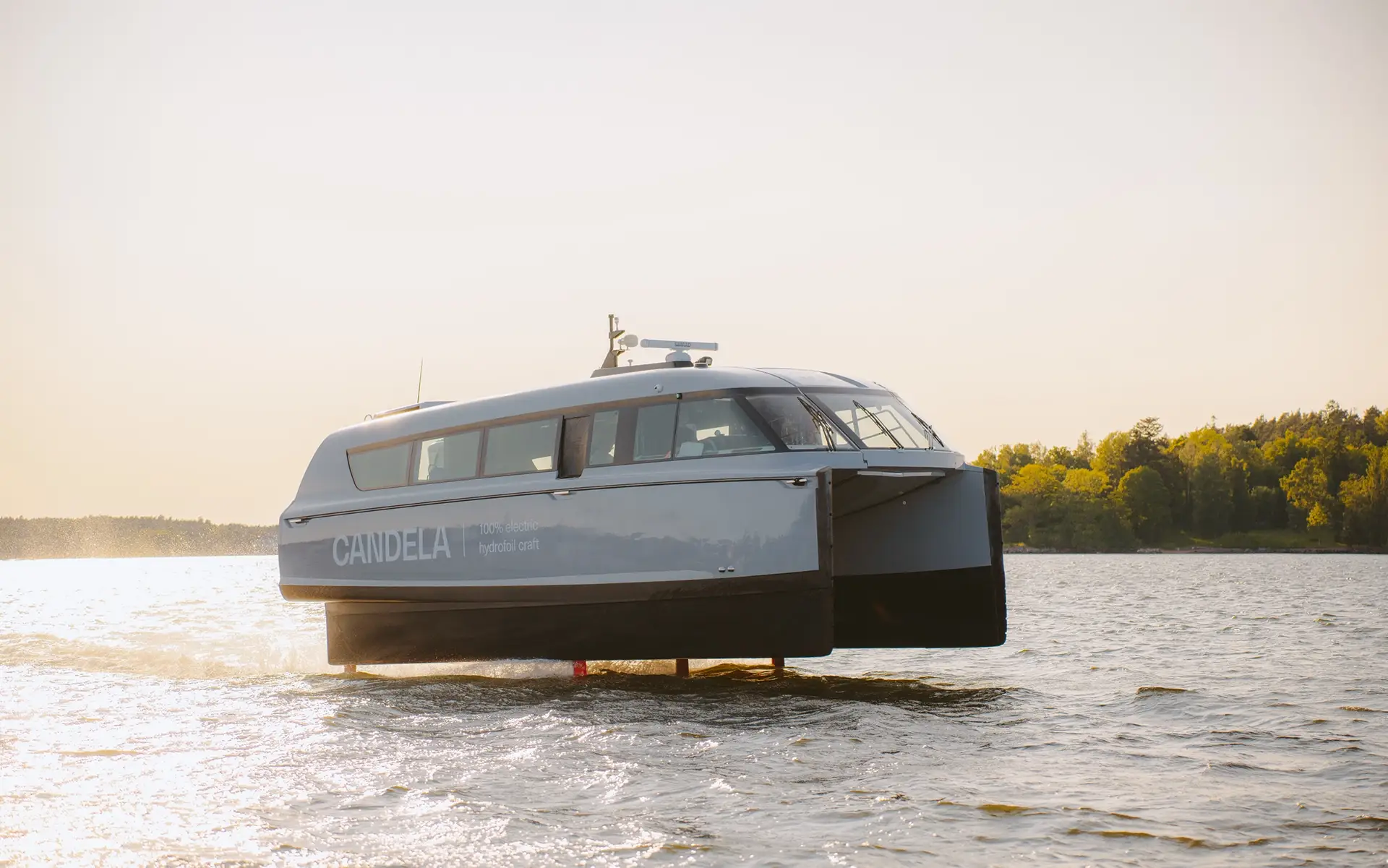
This page collects what the published Queenstown and Otago studies say about ferry and water transport. Each figure is the figure stated in the record, with the page. Where a record does not state a patronage forecast, a cost, or a benefit-cost ratio for a ferry, this page does not estimate one. Programme-wide costs and benefit-cost ratios are labelled as programme figures.
A separate section at the end reports 2025 and 2026 news about electric foiling vessels. That section is context. It is not a finding of these studies.
Latest position
As at
The latest written position is the Queenstown Strategic Network Plan, published in August 2026 (QTS-130). In Table 9, under the role of public transport, it says: "Ferries may support niche markets around the Frankton arm of Lake Wakatipu but cannot resolve the system's long-term capacity constraint" (QTS-130 p.40). The active-modes column of the same table says walking and cycling "extend the catchment of stops, interchanges and ferry services" (QTS-130 p.40).
Figure 3 lists "Supplementary ferry services" as one of the network-wide measures, with more frequent and bigger buses, road pricing and parking management, encouraging smart land use, and onward bus connections (QTS-130 p.10). The plan says these activities are not a funded programme and do not assign delivery responsibility at this stage (QTS-130 p.10). The same figure shows offline public transport as the Frankton to Queenstown connection. It does not name a ferry as that connection.
The preferred-approach map uses the same network-wide label, "supplementary ferry services" (QTS-136).
Two OIA-released papers state the niche role in those words.
- The 15 July 2026 Emerging Direction briefing to Otago Regional Council, under "Other interventions tested – specific projects not taken forward", says: "High-capacity ferries – limited catchment, niche role in system; weak fit with main travel patterns and efficient interchange points" (QTS-124 p.5). The same list includes a Queenstown Hill back road, SH6A tunnelling or double-decking, and a Malaghans Road alternative route.
- The summary slides attached to the 12 August 2026 Board paper say: "High-capacity ferries – limited catchment, weak fit with main travel patterns and efficient interchange points. Ongoing niche role in system" (QTS-224 p.3).
The Board paper itself (QTS-223) and the four-page information sheet (QTS-131) do not mention a ferry. The optioneering memo of 12 June 2026 does. It says water-based options were retained only for high-level testing "because they may serve niche movements, but are unlikely to provide a core strategic capacity response" (QTS-221 p.16). Table 8 then records water-based options, "ferries, amphibious buses", as taken forward only "to confirm whether any core strategic role remained", with "limited capacity/mode shift potential, high operating costs, weather and lake-condition reliability risks, and weak integration with the main origin-destination patterns" (QTS-221 p.16). Table 15 later records high-capacity ferries as "not included as a core strategic intervention", with a "possible niche role" (QTS-221 p.37). The reason given is that previous ferry business case work found the strongest proposition was a Frankton Arm service, while wider lake, Kawarau and combined services performed poorly in economic terms and required a substantially higher subsidy. Ferries "remain relevant for specific movements, particularly Kelvin Heights to the town centre", and "the evidence does not support them as a scalable core network response" (QTS-221 p.37).
How the assessment changed
| Year | Document | What it said about a ferry |
|---|---|---|
| Nov 2007 | Wakatipu Transportation Strategy | Ferry facilities and services sit in the passenger-transport package, with a high-frequency bus and park-and-ride. No ferry cost, BCR or patronage forecast. |
| Feb 2017 | Transport Taskforce | Water taxis are named as one example of a future mode. No assessment. |
| May 2017 | RPTP addendum | Investigate integration of water ferry and water taxi services. Medium and long-term public transport is deferred. |
| Jun 2017 | Integrated transport PBC | A water taxi network is in the recommended programme, and a ferry detailed business case is proposed for 2017/18. |
| Nov 2017 | Facilities IBC and town-centre PBC | A scheduled ferry network is expected by 2030. A public ferry wharf is costed. Frankton Road buses are still expected to reach capacity with improved ferries. |
| Jun 2018 | Ten Year Plan and town-centre framework | $6.114 million for water taxi and ferry infrastructure. The framework sequences ferry infrastructure, then a ferry network to Frankton and Kelvin Heights. |
| May 2019 | Way to Go engagement | 68% of respondents do not use the ferry. 3% commute by ferry. |
| Dec 2019 | Frankton integrated transport PBC | Ferry upgrades sit inside a short-listed programme of about $366 million. A new ferry terminal is a short-term measure. |
| Aug 2019 | MCA, reported in 2020 | The mass-transit ferry is ruled out. Do Minimum and the ferry option are not taken forward. |
| Feb 2020 | Network-options evidence | The ferry option has a lower modelled mode share and higher operating cost than the bus and trackless-tram options. |
| Nov 2020 | Queenstown business case | A subsidised Frankton Arm ferry is reported at a BCR of 0.97. The preferred network keeps one ferry route with five bus routes. |
| Jul 2021 | Spatial Plan | Enhanced ferry services are part of the future transport system. |
| May 2022 | Mode shift plan | Potential enhanced ferry services, with new public transport contracts in 2027. |
| May 2024 | Queenstown Public Transport Business Case | Enhanced Bus Max, including ferries. Other ferry options fail the capacity test. |
| Sep 2024 | QLDC 30-year infrastructure strategy | A Whakatipu ferry network is a long-term initiative, with no route, cost or timeframe. |
| 2025 | Otago RPTP 2025–2035 | A Lake Whakatipu ferry unit runs to June 2030. A ferry to Homestead Bay is a possible later service. |
| Jun 2026 | QSNP optioneering memo | Water-based options may serve niche movements and are not a core capacity response. |
| Jul 2026 | Emerging Direction briefing | High-capacity ferries are not taken forward: limited catchment, niche role. |
| Aug 2026 | Queenstown Strategic Network Plan | Ferries may support niche markets around the Frankton Arm. They cannot resolve the long-term capacity constraint. Supplementary ferry services are a network-wide measure. |
Business case findings
Wakatipu Transportation Strategy, November 2007 (QTS-001)
Passenger transport in the strategy is a high-frequency bus system, with ferry facilities and services and park-and-ride (QTS-001 p.13). The strategy notes strong potential for private enterprise to bring forward bus and ferry services (QTS-001 p.7). It gives no cost, benefit-cost ratio or patronage forecast for a ferry. It does not compare a ferry with other passenger-transport technologies.
Queenstown Transport Taskforce, February 2017 (QTS-004)
The taskforce recommends a shift to public transport and "innovative forms of transport, e.g. automated shared vehicles, e-bikes, water taxis, gondolas, monorail, etc." (QTS-004 p.4). Water taxis are an example in that list. The report does not assess a route, a cost or a benefit.
Regional Public Transport Plan addendum, May 2017 (QTS-005)
Design principles for the new Wakatipu bus network include "investigating integration of water ferry/taxi services" (QTS-005 p.14). The addendum defers medium and long-term public transport projects to the Queenstown Integrated Transport Programme Business Case (QTS-005 p.19). The Five Mile to Kelvin Heights service in this addendum is a bus route, at 60 minutes (QTS-005 p.15).
Queenstown Integrated Transport Programme Business Case, 16 June 2017 (QTS-006, QTS-007)
From about 100 options, stakeholders selected the Balanced Public Transport and Active Modes Focus programme. Table 16 includes a water taxi/ferry network and a mass rapid transit corridor (QTS-006 p.75). The case describes the result as: "Increased public transport reliability and choice through addition of bus priority on SH6A corridor, a Mass Rapid Transit (gondola) and an extensive water taxi network" (QTS-006 p.73). QTS-007 is the one-page extract of that recommended programme and repeats the same sentence (QTS-007 p.1).
Detailed business cases proposed for 2017/18 include the water taxi/ferry network (QTS-006 p.96). The mass rapid transit corridor is costed at $160 million, with a 95th percentile of $240 million (QTS-006 p.95). On the share of programme cost, the case says: "A Mass Rapid Transit corridor provides a good opportunity to attract private investment or alternative funding arrangements, and represents 41% of the total programme cost" (QTS-006 p.11). The same share is also described as the corridor with water taxis and ferries, or the corridor on its own (QTS-006 pp.11, 85, 93). The case does not state a separate cost or benefit-cost ratio for the water taxi network. The programme benefit-cost ratio of 0.7 to 1.0 is for the recommended programme (QTS-006 p.88).
Public and passenger transport facilities indicative business case, November 2017 (QTS-010)
The preferred programme develops ferry wharves and scheduled ferry services. It says water taxis grow by 2023, wharves are upgraded, all Frankton Arm piers become pontoons by 2027, and a scheduled ferry network is expected by 2030 (QTS-010 pp.112, 116-118). It also says: "The bus service along Frankton Road is expected to reach capacity around 2035 even with improved ferry services" (QTS-010 p.118).
For 2045, the modelling estimates 300 peak-hour Frankton Road passengers by bus and water taxi, and 490 by mass rapid transit (QTS-010 p.129). The programme cost is $33,848,000, loaded in 2017/18 to 2023/24, including a public ferry wharf at $5,699,000 and property at $5,225,000 (QTS-010 p.139). The $33,848,000 includes the Stanley Street interchange and is not a ferry-only cost.
Table 1 says: "A mass transit solution (such as a gondola, ferry or light rail system) between Frankton and the Queenstown Town Centre will be studied and planned, with construction expected around or beyond 2037" (QTS-010 p.10). The case lists those as examples. It does not choose among them.
Town Centre Masterplan programme business case, November 2017 (QTS-011)
Programme 6, the preferred programme, includes wharf facilities for waterborne transport (QTS-011 pp.10, 110). Figure 66 shows scheduled ferries from 2024 and a lake-wide ferry network from 2030 (QTS-011 p.144). The construction schedule includes ferry wharves (QTS-011 p.145). The 2045 Frankton Road peak-hour estimate is the same split as the facilities case: 300 passengers by bus and water taxi, and 490 by mass rapid transit (QTS-011 p.141). The programme benefit-cost ratio of 1.7 is for the masterplan programme (QTS-011 pp.132-133).
Town centre spatial framework and 2018–2028 Ten Year Plan (QTS-013, QTS-014)
The spatial framework's Stage One (2019–2022) includes ferry and water taxi infrastructure, and Stage Three (2023–2025) includes completion of a ferry network to Frankton and Kelvin Heights (QTS-013 pp.095-096, 100-104). The Ten Year Plan lists water taxi and ferry network infrastructure at $6.114 million over ten years (QTS-014 Vol 2 p.11).
Way to Go engagement, May 2019 (QTS-018)
The engagement presented the Wakatipu ferry business case among the partnership's projects. Of respondents, 68% do not use the ferry and 3% use it to commute (QTS-018 p.7). The summary says the top ferry improvements named were lower fares, a more convenient stop, and a travel card valid on any public transport. This is a survey result, not an economic appraisal.
Te Kirikiri Frankton integrated transport programme business case, 20 December 2019 (QTS-026)
The short list was Do Minimum at about $10 million, Programme 3 (bus priority, then a trackless tram) at about $295 million, and Programme 4 at about $366 million (QTS-026 pp.71-79). Programme 4 is mass rapid transit linking Lake Hayes Estate, Frankton and the town centre within 10 years, a travellator from Queenstown Event Centre to the airport, and ferry upgrades. The mass-transit description includes complementary ferries (QTS-026 p.76). Both short-listed programmes met the investment objectives. Programme 3 scored marginally better on public-transport share and travel times (QTS-026 p.80).
The recommended programme is the common elements of Programmes 3 and 4, plus either a ground-based mass transit system or mass rapid transit (QTS-026 p.81). Short-term measures for 2019–2024 include a new ferry terminal (QTS-026 p.82). The $366 million and the reported benefit-cost range of 0.3 to 0.6 are programme figures (QTS-026 p.16, pp.71-79). The case does not state a ferry-only cost or benefit-cost ratio.
Network-options evidence, 4 February 2020 (QTS-028)
Modelled AM-peak westbound SH6A public-transport mode shares are: Do-minimum 18% in 2028 and 27% in 2048; Bus Max 32% and 47%; Trackless Tram 31% and 44%; Trackless Tram Max 33% and 51%; mass rapid transit 10% and 15%, plus bus at 21% and 28%; ferry option 8% and 10%, plus bus at 18% and 30% (QTS-028 p.28). The evidence page says "B options for gondola & ferry not yet modelled" (QTS-028 p.28).
Capital cost for Ferry A is $51 million (QTS-028 p.33). Annual operating cost is $36.2 million for the ferry option, $12.8 million for Bus Max, $11.6 million for Trackless Tram, and $18.8 million for mass rapid transit including $10.2 million for a connecting bus (QTS-028 p.34). The page says: "Ferry and Gondola have high terminal and landside infrastructure construction costs, but Gondola has PPP potential – best option for private sector participation" (QTS-028 p.33).
High-capacity public transport notes and the 2020 options appendix (QTS-034, QTS-045, QTS-062)
Technical Note 30 records that a mass-transit ferry between Frankton Beach and Steamer Wharf was discounted for high operating cost, about $900 per hour per ferry, limited capacity of about 800 passengers per hour, and transfer penalties. Vessels were up to $4 million. It was ruled out by the multi-criteria analysis on 2 August 2019 (QTS-034 p.16; QTS-045 p.198). The Bus Max network in that note has five bus routes and one ferry route (QTS-034 p.17).
The options appendix describes six network options, including a ferry option. Do Minimum and Ferry were dropped after the 2 August 2019 workshop. The remaining options were simplified to a bus-to-trackless-tram pathway and mass rapid transit (QTS-045 pp.205-206, p.220, p.221). The same appendix records a Frankton fast ferry 10% mode shift (QTS-045 p.218). The main Queenstown business case records the same workshop: Bus Max, Trackless Tram and mass rapid transit were taken forward, and Ferry and Do Minimum were omitted (QTS-062 p.133).
Queenstown business case, November 2020 (QTS-050, QTS-058, QTS-059, QTS-061)
The strategic context reports the result of the Lake Wakatipu ferry detailed business case: a subsidised Frankton Arm ferry would achieve a benefit-cost ratio of 0.97, "suggesting ferries are unlikely to form the Mass Rapid Transit option for this business case" (QTS-059 p.30). That ferry detailed business case is cited here. It is not a separate record in this register.
The preferred public-transport strategy is a road-based bus rapid transit network building on Bus Max, with five core bus routes and one ferry route (QTS-058 pp.25-26). The summary report lists ferry services, led by Otago Regional Council, among the unfunded items, with town-centre upgrades, the Stanley Street hub, arterial stages 2 and 3, bus rapid transit services, future offline public transport, travel demand management, parking management and intelligent transport systems (QTS-050 pp.14-15). The benefit-cost ratios of 2.3 and 1.5 in that summary are for the recommended elements and the full programme (QTS-050 p.16).
The future-demand note assumes a bus fare of $2 and a ferry fare of $4.90, and a mode penalty of $5 for bus and $7 for ferry (QTS-061 p.5). Its NZ Upgrade Programme scenario uses an improved Kelvin Heights to town centre bus-ferry link (QTS-061 pp.3-4). It says earlier high-capacity scenarios included a ferry option and that Bus Max was preferred (QTS-061 p.4).
Queenstown Lakes Spatial Plan, July 2021 (QTS-068)
The spatial plan extract describes the future transport system as a walking and cycling network, enhanced ferry services, and a frequent public transport system (QTS-068 p.1). The frequent network is described as buses at first. The extract does not cost the enhanced ferry services.
Better Ways To Go, May 2022 (QTS-070)
The mode shift plan includes potential enhanced ferry services, with a step change when public transport contracts are renewed in 2027 (QTS-070 pp.22-23). It does not set a ferry patronage target or a ferry cost.
Queenstown Public Transport Business Case, 2024 (QTS-093, QTS-094, QTS-095)
The service-pattern work started from an 11-option long list, including three ferry options. Spine, one-seat and ferry options other than the Jack's Point spine were rejected because they failed the capacity critical success factor (QTS-095 p.42, p.49). The advisory papers describe that long list as including two ferries and a jet boat, then narrowed (QTS-093 p.103, p.159). The short list was Bus Max against a Jack's Point spine, with bridge, Malaghans Road and ferry variants (QTS-095 p.50). Thirteen short-list options with those variants were tested (QTS-093 pp.449-450).
The preferred option is an enhanced Bus Max (Composite) network using battery electric articulated and standard buses and ferries, staged to a walk-up network, 15 minutes or better, by 2035 (QTS-095 pp.79-82). The summary report describes the same programme and a Kelvin Heights ferry (QTS-094 p.17). Ferry frequency is to rise to 60 minutes in 2024–27 and 30 minutes in 2027–30 (QTS-094 p.10). Otago Regional Council is to create a contracted Kelvin Heights ferry unit (QTS-094 p.23). The summary report states that frequency change. It does not state a patronage forecast for the ferry unit.
The preferred programme has a benefit-cost ratio of 2.3, with a sensitivity range of 1.6 to 2.5 (QTS-095 pp.85-86; QTS-094 p.19). That ratio is for the preferred programme. The case says articulated buses have sufficient capacity until 2053 (QTS-095 p.82). The next-phase scope includes "Investigation of off-line public transport route to supplement the bus and ferry based public transport network" (QTS-095 p.121; QTS-094 p.11, p.28).
QLDC 30-year infrastructure strategy, 19 September 2024 (QTS-090)
A Whakatipu ferry network is listed as a long-term initiative (QTS-090 p.52). The strategy gives it no route, cost or timeframe. The procurement strategy of 15 July 2025 says Otago Regional Council contracts bus and ferry services, and Queenstown Lakes District Council subsidises local bus services and maintains stops and wharves through the Way to Go partnership (QTS-109 pp.19-20).
Otago Regional Public Transport Plan 2025–2035 (QTS-105, QTS-103)
The draft says public transport "will be delivered using the most appropriate mode (e.g. bus, ferry, tram, etc.)" (QTS-105 p.54) and that there may be a future study of other modes for Queenstown, "including an off-line option and a direct ferry service" (QTS-105 p.64). Its 6–30 year map includes a potential ferry to Homestead Bay (QTS-105 pp.65-66). Queenstown feedback recorded interest in "expanding ferry access or ropeway services" (QTS-105 p.108).
The adopted plan keeps the direct-ferry sentence (QTS-103 p.63) and moves the potential ferry to Homestead Bay, with a potential rapid off-line service, to the 2035–2055 map (QTS-103 p.66). The mode example becomes "bus, ferry, rail, cable/rope technologies, etc." (QTS-103 p.52). The Lake Whakatipu ferry unit, Unit 11, runs from July 2025 to June 2030 (QTS-103 p.126). The engagement summary still records interest in expanding ferry access or ropeway services (QTS-103 p.108).
Queenstown Airport Master Plan, November 2023 (QTS-128)
The master plan shows a green link to a proposed Frankton ferry jetty (QTS-128 p.48) and ferry routes on the 2032 movement plan, with dashed routes subject to further investigation (QTS-128 p.59). It does not assess ferry patronage, cost or benefits.
The contracted Lake Whakatipu service
As at
The studies above are investment cases. This section is the service Otago Regional Council has contracted. Wakatipu activity totals mix bus and ferry. They are not repeated here as ferry costs. The wider series is on the ORC current plans page.
Trial and contract
In April 2020 ORC consulted on a proposed 18-month trial of a public ferry, using existing routes, stops and timetable plus three additional services, with a multi-trip fare around $4. A January 2021 start was the proposed date, and the consultation asked about timing because of Covid-19. Funding was to come from targeted rates. ORC's preferred option was the existing public transport benefit zone (QTS-193).
The 2020/21 annual report says: "The ferry trial commenced, however at a reduced level of service" (QTS-168 p.57). The 2021/22 annual report says patronage topped 60,000 (QTS-169 p.51). From mid-2021 ORC part-subsidised Queenstown Ferries, owned and operated by RealNZ (QTS-194). Bee Card was accepted on the ferry from 26 October 2022, at $5 a single trip, or $7 with a bank card. Cash was not accepted. There were no free transfers to the bus. The release said charges were already half price and were likely to stay at that level until late January 2023 (QTS-194). The service was added to the Orbus network as Route 6, linking Queenstown Bay, Frankton Marina, and the Bayview and Hilton jetties (QTS-194).
In 2021/22 and 2022/23 the ferry was budgeted as a gross-fare route and remained a trial on a net-cost basis: the operator kept the fares and ORC paid a net subsidy (QTS-183 p.43; QTS-170 p.81). In 2021/22, Wakatipu fare revenue was $1,591,000 below a $2,750,000 budget, including $630,000 for the ferry, and expenditure was $1,270,000 under budget, of which $500,000 related to the ferry trial (QTS-183 pp.40, 42-43). In 2022/23, ferry fare revenue was $812,000 below budget and ferry spend was $1,298,000 lower (QTS-184 p.9, p.18).
A committee agenda reports 2022/23 ferry patronage of 104,240, up 74%, with fare revenue up 244% (QTS-078 pp.23, 30). The Bee Card ferry fare has been $10 since July 2023. The 2024 performance report also states a cash fare of $14 (QTS-150 p.130).
Council approved award of the Lake Whakatipu ferry contract to Watersports Ltd in July 2025 (QTS-149 p.66). The award was considered in public-excluded session on 23 July 2025, so the term and the contract value are not public (QTS-189). The 2024–2027 procurement strategy had anticipated a new contract to 30 June 2029 (QTS-155 p.20). Timetable changes started on 4 July 2025, with late services seven nights a week rather than three. From 22 September 2025, services run every hour between 8.15am and 9.45pm (QTS-192). The September 2025 release states the fare as $10 with a Bee Card or $14 with a bank card, children under 5 free, and cash not accepted (QTS-192). A new Orbus-branded vessel is described for August 2026 (QTS-151 p.263).
The 2025/26 annual plan and the 2026/27 annual plan dropped a planned ferry service expansion after NZTA declined co-funding (QTS-153 p.7; QTS-177 p.54). The August 2026 agenda says: "Further potential service level increases are currently under discussion with the operator" (QTS-151 p.263).
Patronage and fare revenue
Vertical axis: ferry trips. Labels 23, 24 and 25 are the financial years 2023/24, 2024/25 and 2025/26. Source: ORC public transport performance reports, QTS-150 pp.128, 130; QTS-149 pp.36, 38; QTS-151 pp.259, 263.
| Year | Trips | Change | Fare revenue | Source |
|---|---|---|---|---|
| 2023/24 | 74,062 | −29% | $779,418.75 | QTS-150 pp.128, 130 |
| 2024/25 | 71,123 | −4% | $772,775 | QTS-149 pp.36, 38 |
| 2025/26 | 94,135 | +32% | $970,144 | QTS-151 pp.259, 263 |
The September 2025 release gives the same 2024/25 total, 71,123 trips, down 4%, and says January to July 2025 patronage was 4% higher than the year before. It also says extending late services from 4 July produced a 9% patronage increase for that month (QTS-192).
For 2025/26, Queenstown fare revenue was $1,176,000 above budget, including $368,000 of ferry fares (QTS-151 p.50). That variance is for Queenstown public transport fare revenue, not a ferry-only total.
Net contract cost reported under LGOIMA
The revised October 2025 response attributes these ferry figures to Unit 8. Fares in that response exclude SuperGold. The original and revised releases differ on the bus figures; the ferry columns below are the revised response (QTS-190 F2). NZTA funds up to 51% of applicable spend, and the share is capped (QTS-190 F1 p.1).
| Year | Ferry net contract cost | Ferry attributed fares |
|---|---|---|
| 2020/21 | $24,152 | $290,984 |
| 2021/22 | $919,166 | $282,586 |
| 2022/23 | $489,290 | $972,334 |
| 2023/24 | $551,474 | $779,419 |
The 2023/24 attributed fare, $779,419, is the LGOIMA figure. The performance report for the same year states ferry fare revenue of $779,418.75 (QTS-150 p.130). The two publications are one cent apart at the dollar.
Move Queenstown note. Not a finding of the studies above.
Kingston: a possible niche route
Kingston Village is a proposed residential development of about 88 hectares at Kingston, at the southern end of Lake Whakatipu. Its developer says the project has been lodged for referral under the Fast-track Approvals Act. Kingston Village project site (developer) (opens in new tab)
The studies on this page consistently describe ferries as having a niche role in the Whakatipu network rather than a core capacity role. The Queenstown Strategic Network Plan says ferries "may support niche markets" (QTS-130 p.40). NZTA's 2026 optioneering memo records a "possible niche role" (QTS-221 p.37), and its Board summary describes an "Ongoing niche role in system" (QTS-224 p.3).
A Kingston–Queenstown service may be one of those niche applications. It is a long lake crossing that would serve a growing settlement at the far end of the lake, which is the kind of route where faster electric foiling vessels could make a real difference to travel times. Reported figures put the crossing at about 40 minutes, with vessels of about 30 passengers (Otago Daily Times, September 2025 (opens in new tab)), and Kingston Village led a trial of a foiling vessel on the lake in February 2026 to inform a feasibility study later in 2026 (see below).
No study in this archive has assessed a Kingston–Queenstown ferry route. The feasibility study reported for later in 2026 would be the first.
Electric foiling trials
As at
This section is news context, accessed . It is not a finding of the business cases or of the Strategic Network Plan. No regular service, timetable or business case has been confirmed.
In September 2025 the Otago Daily Times reported that Kingston Village Ltd was exploring a 30-passenger electric foiling ferry between the southern end of Lake Wakatipu and Queenstown Bay, with a travelling time of about 40 minutes. The report says two vessels could provide a both-ways service on the hour, with about 20 minutes of charging on top of the crossing, and that the Candela P-12 was being considered. It also says the proposal would need a Kingston wharf upgrade, a power supply, and consents from Queenstown Lakes District Council and Otago Regional Council. Electric ferry service being mulled (opens in new tab) (Otago Daily Times, 12 September 2025).
In February 2026, four outlets reported a separate trial of a Vessev vessel, led by Kingston Village.
- Baird Maritime (trade publication) (6 February 2026) said Vessev would trial the nine-metre hydrofoil tour boat Kermadec on 10 February 2026, to examine travel times, passenger experience and lake operations for possible connections between Queenstown and Kingston, and that the findings would inform a feasibility study later in 2026. Hydrofoil tour boat to conduct trial sailings in Queenstown (opens in new tab).
- EVs and Beyond (trade publication) (6 February 2026) described the same 10 February trial of the VS-9, carrying up to 10 passengers, with a 25-knot cruise. Vessev trials electric hydrofoiling ferry on Lake Wakatipu (opens in new tab).
- Inside Tourism (trade publication) (9 February 2026) said the trial would assess travel times, passenger experience and operational factors, with findings feeding a feasibility study planned for later in 2026. Electric hydrofoiling passenger vessel to be trialled on Lake Whakatipu (opens in new tab).
- Marine Business News (trade publication) (10 February 2026) said the VS-9 trial would run on 10 February. It gives a cruise speed of 25 knots, capacity of up to 10 passengers, and a range of up to 50 nautical miles light-loaded. Vessev works with New Zealand's fastest-growing city (opens in new tab).
These reports describe a trial set for 10 February 2026. They do not report the trial's results, and they do not announce a service.
Kingston Village's project page says the Kingston Project has been lodged for referral under the Fast-track Approvals Act and forwarded to the Minister for Infrastructure, with a referral decision pending. The page includes "potential electric ferry services" and "electric ferry connections and an integrated transport hub" among the proposal. It does not give a date for the page. The Kingston Project (opens in new tab).
The 2025 Candela P-12 exploration and the 2026 Vessev VS-9 trial are different vessels. The articles do not say that one has replaced the other.
Context, not a finding of the plan. A point-to-point route such as Kingston to Queenstown, where the road alternative is long and congested, is the kind of targeted application that sits within the niche role the Strategic Network Plan describes for ferries. The feasibility study planned for later in 2026 is what would show whether this proposal stacks up.
What these records do not state
- The August 2026 plan does not cost supplementary ferry services, and it does not set a ferry timetable.
- The Queenstown Public Transport Business Case states a Kelvin Heights ferry frequency. Its summary does not state a patronage forecast for that unit (QTS-094 p.10, p.23).
- The Lake Whakatipu ferry contract term and value were considered in public-excluded session (QTS-189).
- No published record assembled here states that a regular electric foiling service, a foiling timetable, or a foiling business case has been confirmed.
Sources
- QTS-130 Queenstown Strategic Network Plan (August 2026)
- QTS-136 Queenstown Strategic Network Plan – Preferred strategic approach map (activities organised around four corridors and network-wide initiatives)
- QTS-124 Queenstown Strategic Network Plan – Emerging Direction (Otago Regional Council Briefing, 15 July 2026)
- QTS-224 Queenstown Strategic Network Plan – summary (Attachment 1 to the August 2026 Board paper)
- QTS-223 Queenstown Strategic Network Plan – NZTA Board paper for endorsement (12 August 2026)
- QTS-131 Queenstown Strategic Network Plan (QSNP) – Further information sheet (August 2026)
- QTS-221 Queenstown Strategic Network Plan – optioneering approach and longlist (technical memo, final, 12 June 2026)
- QTS-001 Wakatipu Transportation Strategy
- QTS-004 Queenstown Transport Taskforce Report
- QTS-005 Regional Public Transport Plan Otago 2014 - Addendum: Wakatipu Basin Public Transport
- QTS-006 Queenstown Integrated Transport Programme Business Case (2017 programme business case)
- QTS-007 Queenstown Integrated Transport Programme Business Case - 4. Recommended Programme (page extract)
- QTS-010 Queenstown Public and Passenger Transport Facilities Indicative Business Case
- QTS-011 Queenstown Town Centre Masterplan Programme Business Case
- QTS-013 Queenstown Town Centre Spatial Framework
- QTS-014 Ten Year Plan 2018-2028 | He Mahere Kahurutaka 2018-2028 (Volumes 1 and 2)
- QTS-018 Smarter journeys, together. Community Engagement Summary
- QTS-026 Te Kirikiri Frankton Integrated Transport Programme Business Case
- QTS-028 Appendix B23 Technical Note 19: Scope Extension Beyond SH6/6A Intersection (with Appendix B24 Technical Note 40: Ladies Mile, Appendix B25 Queenstown Public Transport Network Options Multi Criteria Analysis, and Appendix B26 Technical Note 43: Frankton Pedestrian Crossings)
- QTS-034 Appendix C11 Technical Note 36: Intelligent Transport Systems (Application of ITS in Queenstown), with Appendix C12 Technical Note 30: High Capacity Public Transport and Appendix C13 Consenting Strategy
- QTS-045 Appendix B Options Assessment (B1 Options Development Process; B2 Longlist Options; B3 Modelling Reports; B4 Future Public Transport Model; B5 Technical Note 30: High Capacity Public Transport; B6 Technical Note 12: Queenstown Public Transport Development Story; B7 Technical Note 18: Queenstown Lakeview Bus Service Analysis)
- QTS-062 Queenstown Business Case (NZ Upgrade Programme Queenstown Transport Detailed Business Case) – main volume, redacted
- QTS-050 Queenstown Business Case – Summary Report
- QTS-058 Queenstown Business Case – Preferred Option Assessment
- QTS-059 Queenstown Business Case – Strategic Context
- QTS-061 Wakatipu Basin Future Public Transport Demand Analysis – Technical Note 3b – Future Scenarios Update (Sept 2020)
- QTS-068 The Queenstown Lakes Spatial Plan (Part 4, printed pp.86-115)
- QTS-070 Better Ways To Go – More people walking, cycling and using public transport in the Queenstown Lakes District (Mode Shift Plan)
- QTS-093 Queenstown Public Transport Business Case – Advisory Papers (compiled: Public Transport Hubs and Infrastructure; Service Patterns; System Management; Park & Ride; On-Demand Services; Ownership and Operating Model; Fleet Decarbonisation; Sustainable Funding Model; Forecast Demand)
- QTS-094 Queenstown Public Transport Business Case – Summary Report
- QTS-095 Queenstown Public Transport Business Case
- QTS-090 30 Year Infrastructure Strategy – Water, Transport, Waste and Social 2024–2054
- QTS-109 Strategy for the Procurement of Transport Infrastructure (Transport Procurement Strategy 2025-28)
- QTS-105 Otago Regional Public Transport Plan 2025–2035 (Draft/Consultation)
- QTS-103 Otago Regional Public Transport Plan 2025–2035 (Final/Adopted)
- QTS-128 Queenstown Airport Master Plan
- QTS-193 ORC to consult on Lake Wakatipu public ferry service trial (media release)
- QTS-168 ORC Annual Report 2020/21
- QTS-169 ORC Annual Report 2021/22
- QTS-194 ORC's Bee Card links buses and boats – QT style (media release)
- QTS-183 ORC Finance Committee 25 Aug 2022 – Agenda
- QTS-170 ORC Annual Report 2022/23
- QTS-184 ORC Finance Committee 24 Aug 2023 – Agenda
- QTS-078 Public and Active Transport Committee 9 August 2023 – Agenda
- QTS-150 ORC Public and Active Transport Committee 7 Aug 2024 – Agenda
- QTS-149 ORC Public and Active Transport Committee 3 Sep 2025 – Agenda
- QTS-189 ORC Council 23 Jul 2025 – Minutes
- QTS-155 ORC Transport Procurement Strategy 2024-2027
- QTS-192 ORC launches expanded Queenstown Ferries service (media release)
- QTS-151 ORC Council Meeting 26 Aug 2026 – Agenda (incl. Q4 2025/26 performance & finance; Central Lakes sub-regional PT investment case)
- QTS-153 ORC Annual Plan 2025-26
- QTS-177 ORC Annual Plan 2026-27 (adopted 29 Apr 2026)
- QTS-190 LGOIMA SR.5793 PTOM patronage, fare & subsidy information (FYI request 31532) – original release, revised response xlsx, Council 25 Mar 2026 extract